 Image 1 of 1
Tracklisting:
A1. Uskamosothotsa
A2. Ubohisa Kanna
A3. Via Zimbabwe
B1. Raditaba (Nozindaba)
B2. Professor 3
B3. Zabalaza
Label: Awesome Tapes From Africa
Cat. #: ATFA032LP
Format : LP
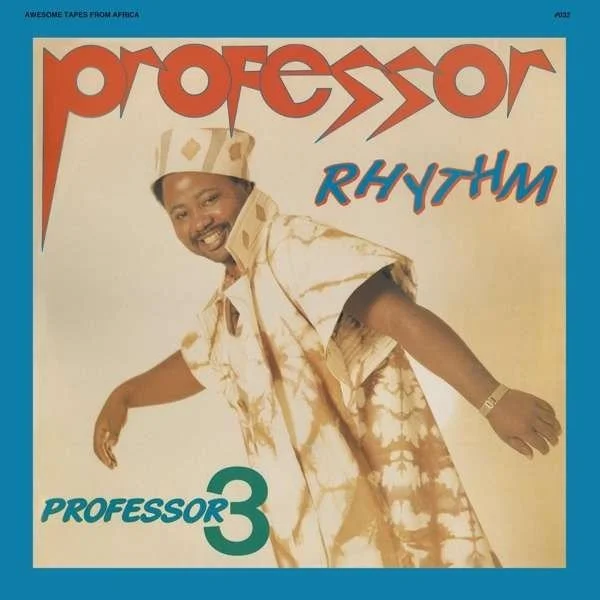
Professor Rhythm’s 1991 recording Professor 3 is a vivid reflection of urban South Africa as apartheid was ending. Thami Mdluli’s production project had young and old dancing to a sound that sought to unite Blacks within Southern Africa. “Our music gave hope to the hopeless,” he says. Mdluli’s third instrumental album (which contains some background vocals, to be exact), portrays the moment when the dominant mbaqanga and American R&B-based bubblegum sounds being produced in Johannesburg and other urban centers were transforming into house and hip-hop-inspired kwaito.
The pop of the 80’s and all that went with it—from the models of synths and drum machines to the lyrical style—gave way to a changing melodic emphasis and new, much slower tempi using a completely different rhythmic skeleton. Upbeat, chipper bubblegum, often with double-time breakdowns and upstroke syncopations, faded and the sounds began to more closely resemble those of contemporary Black America—where hip-hop was slowing down and the bass-lines and melodies were getting moodier, darker in general.
At the same time house music had briefly reached mainstream acceptance in the States and that popularity continued to feed into awareness overseas. These two influences blended with the burgeoning house music scenes in Johannesburg and Pretoria as Professor Rhythm 3 was being produced in March 1991 (the same year apartheid ended). Mdluli explains, “We were influenced by foreign bands and so people updated their sound.” Professor 3 came out on vinyl as the LP business was dying in South Africa and sold around 20,000 copies. It was mainly distributed on tape, which sold closer to 100,000.
Professor Rhythm’s 1991 recording Professor 3 is a vivid reflection of urban South Africa as apartheid was ending. Thami Mdluli’s production project had young and old dancing to a sound that sought to unite Blacks within Southern Africa. “Our music gave hope to the hopeless,” he says. Mdluli’s third instrumental album (which contains some background vocals, to be exact), portrays the moment when the dominant mbaqanga and American R&B-based bubblegum sounds being produced in Johannesburg and other urban centers were transforming into house and hip-hop-inspired kwaito.
The pop of the 80’s and all that went with it—from the models of synths and drum machines to the lyrical style—gave way to a changing melodic emphasis and new, much slower tempi using a completely different rhythmic skeleton. Upbeat, chipper bubblegum, often with double-time breakdowns and upstroke syncopations, faded and the sounds began to more closely resemble those of contemporary Black America—where hip-hop was slowing down and the bass-lines and melodies were getting moodier, darker in general.
At the same time house music had briefly reached mainstream acceptance in the States and that popularity continued to feed into awareness overseas. These two influences blended with the burgeoning house music scenes in Johannesburg and Pretoria as Professor Rhythm 3 was being produced in March 1991 (the same year apartheid ended). Mdluli explains, “We were influenced by foreign bands and so people updated their sound.” Professor 3 came out on vinyl as the LP business was dying in South Africa and sold around 20,000 copies. It was mainly distributed on tape, which sold closer to 100,000.
Tracklisting:
A1. Uskamosothotsa
A2. Ubohisa Kanna
A3. Via Zimbabwe
B1. Raditaba (Nozindaba)
B2. Professor 3
B3. Zabalaza
Label: Awesome Tapes From Africa
Cat. #: ATFA032LP
Format : LP